

Yoga Nidra
After exerting and expelling energy through conscious breathing, pranayama, and asana, the body becomes prepared and ready to rest. From here, we settle into one of the most rewarding, enriching, and transformative practices: savasana, or Yoga Nidra.
The body is gently tired, open, and receptive. Asana allows you to more easily enter a meditative state. My favourite part of yoga—and what initially brought me to the mat—was savasana. A few years ago, I completed a week-long immersive course with Cathy French. If you haven’t heard of her before, she delivers some of the most poetic Yoga Nidras I’ve ever experienced.
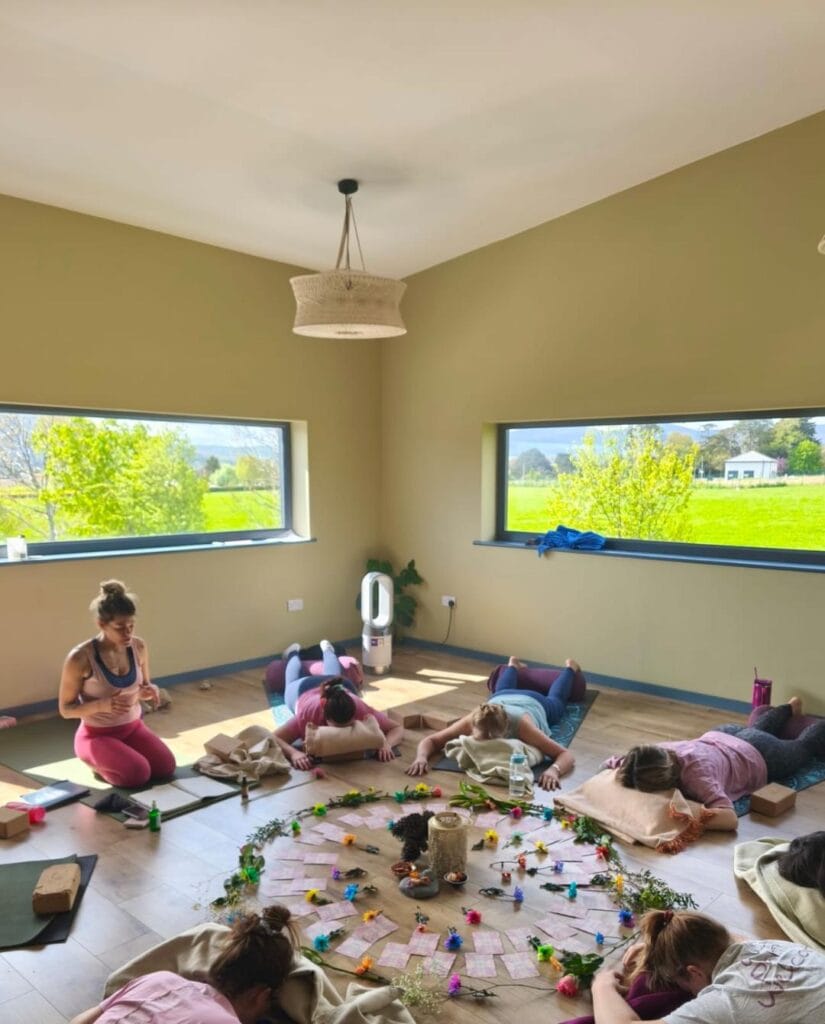
During my week of teaching, I like to include at least one Yoga Nidra practice in my classes. You begin by lying back on your mat, finding a deeply comfortable position with the support of props. From here, you nestle into a space within your heart and journey inward—into an ethereal inner world—transitioning from doing to simply being. There is nothing to hold onto here. Awareness drops from the thinking mind, settles on the breath, and begins to rest in the body.
Yoga Nidra is a systematic, scientific approach to inducing complete mental, emotional, and physical relaxation. It is accessible to all practitioners. Authentic Yoga Nidra is often described as a state of “dynamic sleep”—where the body appears asleep, yet consciousness remains active on a deeper level. In this threshold between sleep and wakefulness, contact with the subconscious and unconscious arises naturally and spontaneously.
In the context of Raja Yoga, as described by Patanjali, this relates to the state of pratyahara—the withdrawal of the senses. Here, the mind disengages from external sensory input and mental chatter begins to quiet. Yoga Nidra is a powerful expression of this state.
During Yoga Nidra, you are guided through specific stages, one of which is the rotation of consciousness. This involves systematically moving awareness through different parts of the body—for example: right hand thumb, second finger, third finger, fourth finger, fifth finger, and so on. Researchers have linked this practice to the brain’s internal mapping of the body, sometimes referred to as the motor homunculus—a neurological representation of the physical body within the cerebral cortex. Each body part we bring awareness to corresponds to this internal map.
How does the “magic” happen?
Yoga Nidra works through the principle of receptivity. When the mind is fully engaged with the senses, it is less receptive. But when deep relaxation is achieved, receptivity increases.
In our usual waking state, the intellect filters and processes incoming information, meaning that much of what we experience does not fully imprint on the deeper layers of the mind. However, when we withdraw slightly from this analytical state and enter the space between wakefulness and sleep, impressions become far more potent. What is introduced to the mind in this state can take root deeply.
This is where sankalpa, or intention-setting, becomes so powerful. A sankalpa is more than a simple positive affirmation. When repeated in this deeply receptive state, it has the potential to reshape neural pathways—supporting the release of limiting patterns, the overcoming of fears, and the planting of meaningful, intentional seeds for growth.
Rewiring the brain is just one aspect of Yoga Nidra. The practice also supports the nervous system by guiding the body into the parasympathetic state—the “rest and digest” mode—allowing for profound restoration. Personally, I have experienced feelings of oneness, expansiveness, liberation, and moments of deep clarity when mental activity quiets.
From a physiological perspective, psychosomatic imbalances can begin to restore as prana, or life-force energy, is liberated and redirected. When the body is deeply relaxed, this energy can nourish and rejuvenate organs, tissues, and glands that may be overtaxed.
Writing Your Own Yoga Nidra
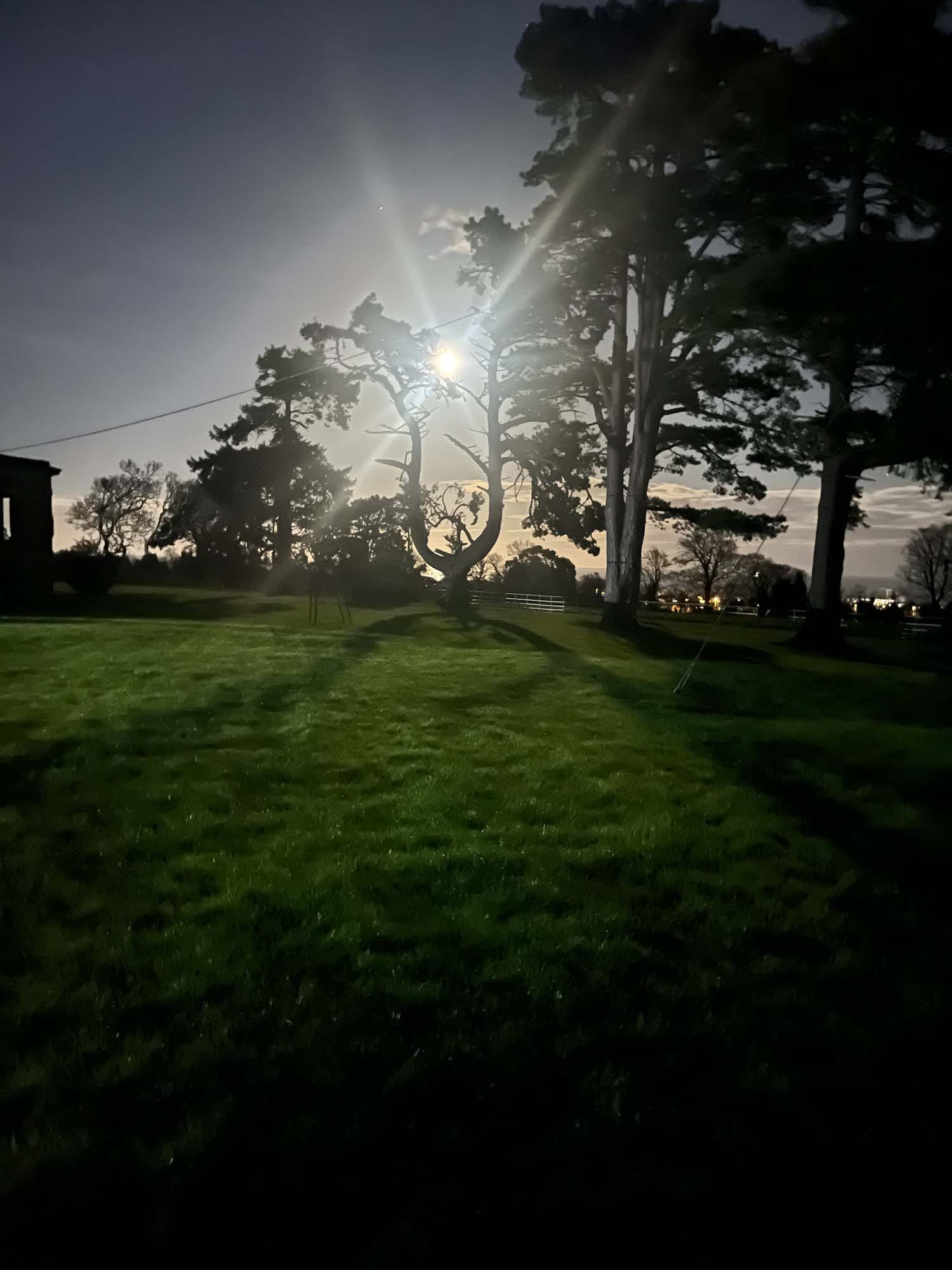
Personally, I love weaving elements of the natural world into my Yoga Nidra scripts. Whether it’s a full moon, a new moon, or a change in season, I believe we are deeply connected to these rhythms. As human beings, we don’t just observe nature—we are nature.
On a subtle level, we feel the shifting tides, the budding of flowers, the lengthening of sunlight, and the quiet stillness of winter. We are constantly evolving alongside these changes. In a deeply meditative state, even a soft internal whisper can be profoundly transformative—felt and embodied at a cellular level.
The benefits of Yoga Nidra extend beyond the individual. The work you do within yourself ripples outward into your environment—into your relationships with partners, children, parents, and the wider community. The way you show up in the world shifts, and those around you receive the quiet medicine of your presence.